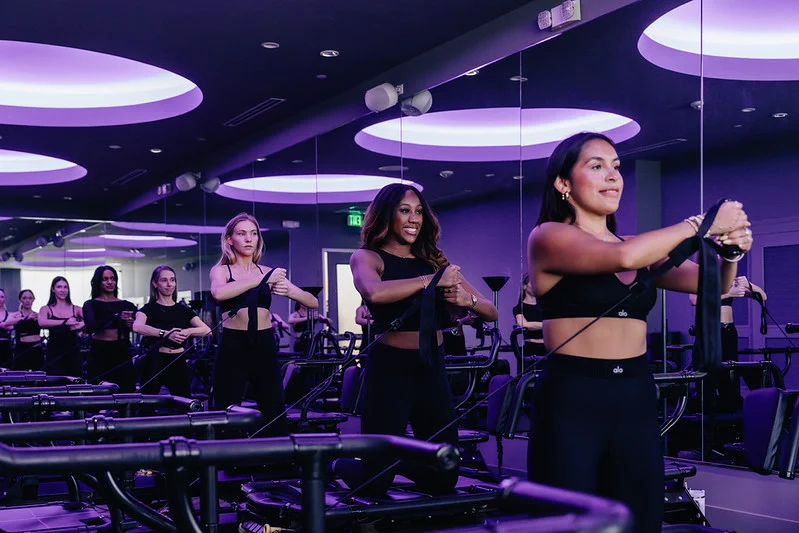
When most people picture strength training, they picture barbells, heavy plates, and a gym floor that smells like rubber. What they don’t picture is a reformer-style machine, a mirrored studio, and a 50-minute class that leaves every muscle in their body shaking.
That’s exactly what Lagree strength training does. And at TIGHT Dallas, it’s what we’ve been building our clients on since day one.
Lagree isn’t a lighter version of strength training. It isn’t a trend dressed up in fitness terminology. It’s a method grounded in slow-tempo resistance, spring-loaded tension, and full-body mechanics that builds the kind of structural strength your body was actually designed for. The kind that holds up over decades, not just gym seasons.
If you’ve wondered whether a low-impact, high-intensity workout can genuinely deliver strength results, this post is for you. We’re breaking down exactly how the Lagree method works, what it targets, and why it belongs in the same conversation as any serious strength training program.
What Is Lagree Strength Training, Really?
Most strength training focuses on one thing: moving as much weight as possible. More load, more reps, more progress. The Lagree method takes a fundamentally different approach.
Lagree Fitness, developed by Sebastien Lagree, is built on the principle that muscle fatigue, not maximum load, is the true driver of strength and hypertrophy. By slowing down the tempo of every movement, extending time under tension, and using spring-based resistance rather than dead weight, Lagree forces muscles to work harder for longer, without the joint stress that comes with heavy lifting.
The result is a form of Lagree strength training that builds deep, functional muscle rather than surface-level size.
The Lagree Method vs. Traditional Lifting
Traditional resistance training often relies on momentum. Even experienced lifters use it, a slight swing of the hips on a curl, a bounce at the bottom of a squat. That momentum offloads the muscle at the exact moment you need it most.
Lagree removes momentum entirely. On the megaformer, every rep is controlled from start to finish. There’s no dropping the weight, no resting at the top, no cheating the range of motion. Your muscles are loaded continuously throughout the movement, which means more fibers are recruited, more work is done, and more adaptation is triggered.
Why Slow Reps Build More Strength Than You Think
The research on slow-tempo resistance training is detailed. According to the American Council on Exercise, slower repetition speeds increase muscle activation and maximize time under tension, two of the primary drivers of muscular strength and endurance development.
At TIGHT Dallas, our instructors cue a two-second hold at the point of peak tension in every exercise. Those two seconds are where the real work happens. It’s uncomfortable, it’s effective, and it’s exactly what your muscles need to get stronger.
How the Megaformer Creates Structural Strength
The Megaformer is the tool at the center of every Lagree strength training session. It looks like an evolved version of a Pilates reformer, and in many ways it is, but its resistance system, range of motion, and exercise library go significantly further.
Spring Resistance and Muscle Fiber Recruitment
Unlike free weights, which rely on gravity and are hardest at the top of a movement, the megaformer’s spring system creates resistance throughout the entire range of motion. That means there’s no easy point in the rep. The muscle is challenged from the first degree of movement to the last.
This type of resistance is particularly effective at recruiting both slow-twitch and fast-twitch muscle fibers simultaneously. Slow-twitch fibers handle endurance and postural stability. Fast-twitch fibers handle power and size. Most workouts train one or the other. The megaformer workout trains both in the same movement.
Eccentric Loading: The Secret Behind Lasting Results
Eccentric contractions, the lengthening phase of a muscle under load, are widely recognized by the National Strength and Conditioning Association as one of the most effective stimuli for muscle growth and long-term strength development.
On the megaformer, the return phase of every exercise is just as loaded as the drive phase. You’re not releasing tension when you come back. You’re controlling it. That eccentric emphasis is one of the primary reasons clients at TIGHT Dallas see strength results that carry over into everyday life, not just into their next class.
Which Muscles Does Lagree Strength Training Target?
The honest answer is: all of them. But there’s a hierarchy worth understanding.
Core Stability as the Foundation
Every exercise on the Megaformer requires core engagement. Not because we cue it constantly (though we do), but because the machine demands it structurally. If your core isn’t working, your form breaks down. Full stop.
This isn’t the kind of core work that trains a six-pack for aesthetics. It’s the deep stabilizing musculature, the transverse abdominis, the obliques, the multifidus, that keeps your spine protected, your posture upright, and your movement efficient for life.
Upper Body, Glutes, and Posterior Chain
Beyond the core, Lagree strength training puts serious emphasis on the posterior chain: glutes, hamstrings, lower back, and upper back. These are the muscles most people neglect and are most often responsible for chronic pain and injury when they’re weak.
We also work shoulders, chest, triceps, and biceps through upper body sequences that use the Megaformer’s cables and carriage for resistance. The full-body nature of the method means no muscle group gets a free pass in a single session.
Is Lagree Strength Training Good for All Ages and Fitness Levels?
One of the most common questions we get at TIGHT Dallas is: Is this for me? Whether you’re 25 and an athlete or 55 and returning to fitness after years away, the answer is yes.
Why It Works for Beginners at TIGHT Dallas
The spring resistance on the megaformer is fully adjustable. Beginners work at lower tension levels that still challenge the muscle without overwhelming it. Our TIGHT Dallas instructors are trained to modify every exercise in real time, so your first class meets you exactly where you are.
The low-impact nature of the method also means there’s no pounding, no jumping, and no movement that puts acute stress on joints. That matters especially for clients managing past injuries or returning from time off.
Why Athletes and Advanced Clients Keep Coming Back
For clients who already train at a high level, the megaformer presents a different kind of challenge: control. Athletes accustomed to moving heavy loads quickly often discover that slowing down and eliminating momentum is significantly harder than they expected.
Lagree strength training builds the kind of muscular endurance and stability that complements any sport or training program. Many of our members use TIGHT Dallas as a recovery-day workout that still delivers real strength stimulus.
Lagree Strength Training vs. Pilates: What’s the Difference?
The Lagree vs. Pilates question comes up constantly, and it’s worth addressing directly.
Intensity and Resistance Levels Compared
Traditional Pilates, particularly mat and classical reformer work, emphasizes flexibility, breath, and movement precision at relatively low resistance levels. It’s an excellent practice. The Lagree method shares Pilates’ emphasis on controlled movement but operates at a significantly higher intensity and resistance level.
The megaformer’s spring system goes well beyond what a standard reformer offers. Combined with the slow tempo and extended time under tension, Lagree classes consistently elevate heart rate into cardio zones while simultaneously driving muscular fatigue. That combination is what makes it a genuine low-impact, high-intensity workout rather than a gentle movement practice.
Which One Builds More Functional Strength?
Both methods build strength. But the Lagree method, with its heavier resistance options, eccentric loading emphasis, and full-body integration, is designed specifically to build functional, structural strength. The kind that changes how your body moves, holds itself, and performs outside the studio.
At TIGHT Dallas, we think of it this way: Pilates teaches your body to move well. Lagree teaches your body to move well under serious load.
What to Expect in a Lagree Strength Class at TIGHT Dallas
If you’ve never done a Lagree class at TIGHT Dallas, here’s what to know before your first session.
Class Format and Instructor Guidance
Every class runs 50 minutes on the Megaformer. Your instructor will take you through a series of compound movements, each held for an extended duration at a slow, controlled tempo. You’ll work through lower body, core, and upper body sequences, often combining multiple muscle groups in a single movement pattern.
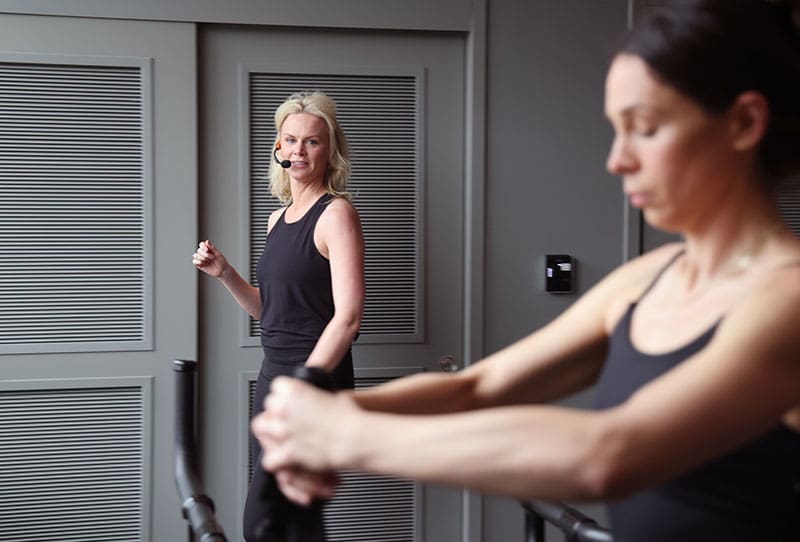
Our instructors don’t just call out the names of exercises. They cue form, adjust spring resistance in real time, and coach you through the hardest parts of each position. The small class format at TIGHT Dallas means you get real attention, not just a spot in a packed room.
How Often Should You Train for Structural Results?
For clients building toward structural strength outcomes, we recommend three sessions per week as a starting point. That frequency provides enough stimulus for adaptation while giving the muscle fibers adequate recovery time between sessions.
Clients who want to complement an existing training program often train two days at TIGHT Dallas alongside their other workouts. Both approaches yield results. Check our membership options to find the schedule that fits your life.
The Long-Term Benefits of Lagree Strength Training
Here’s where Lagree strength training separates itself from most fitness formats: the results compound over time.
Posture, Joint Health, and Injury Prevention
Because the Lagree method builds deep stabilizing muscles alongside the primary movers, long-term practitioners consistently report improvements in posture, reduced chronic pain, and fewer overuse injuries.
Harvard Health notes that low-impact strength training is one of the most effective interventions for long-term joint health, particularly as we age. Lagree delivers that stimulus without the impact load of running or the acute joint stress of heavy barbell work.
This is the “body that lasts” part. Structural strength isn’t just about looking strong. It’s about moving well at 35, at 55, and at 75.
Body Composition Changes Over Time
Muscle is metabolically active tissue. Building it through consistent Lagree strength training raises your resting metabolic rate, which means your body burns more calories at rest. Combined with the cardio demand of a high-intensity Lagree session, consistent training produces measurable changes in body composition over time.
At TIGHT Dallas, we see this play out with members who’ve been with us for six months, a year, two years. The changes aren’t just visible. They’re structural. They’re in how clients carry themselves, how they move through their day, and how they feel in their bodies.
That’s what we’re building toward. Not a quick result. A body that lasts.
Ready to experience Lagree strength training for yourself? Book your first class at TIGHT Dallas and find out what structural strength actually feels like. Your body will thank you for the next several decades.
Frequently Asked Questions
Is Lagree considered strength training?
Yes. Lagree qualifies as strength training because it uses resistance, specifically spring-based tension on the megaformer, to challenge muscles through a full range of motion under sustained load. The slow tempo and extended time under tension drive the same muscular adaptations as traditional resistance training: increased strength, muscle endurance, and hypertrophy over time.
How long does it take to see strength results from Lagree?
Most clients notice changes in muscle tone and endurance within four to six weeks of consistent training. Structural strength improvements, including posture changes and improved functional movement, typically become more pronounced after eight to twelve weeks of training two to three times per week. Results vary based on frequency, nutrition, and starting fitness level.
Can Lagree replace weight training?
For many clients, yes. Lagree strength training provides sufficient resistance stimulus to build and maintain muscle without traditional weights. The Megaformer’s spring resistance system challenges both slow-twitch and fast-twitch fibers, which covers the full spectrum of strength development. Clients with specific powerlifting or sport performance goals may benefit from combining Lagree with traditional lifting.
Is Lagree good for women who want to build strength without bulk?
Lagree is particularly well suited for strength training for women who want lean, functional strength without excessive mass. The slow-tempo, spring-based resistance builds muscle density and endurance without the high-load, low-rep protocols associated with hypertrophy-focused programs. The result is a strong, capable body with improved tone rather than significant size increase.
What makes Lagree Dallas different from other fitness options?
Lagree in Dallas, particularly at TIGHT Dallas, combines the Lagree method with small-group classes, expert instruction, and a studio environment designed around results. The combination of the megaformer, qualified instructors, and a community of committed members creates an experience and outcome you won’t find in a large group fitness class or a standard gym.
How is Lagree strength training different from Pilates?
While both Lagree and Pilates use controlled, precision-based movement, the Lagree method operates at a higher resistance level and intensity. The megaformer offers significantly more spring resistance than a standard reformer, and the Lagree method is specifically designed to drive muscular fatigue and strength adaptation. Pilates emphasizes flexibility and movement quality; Lagree emphasizes those same qualities under genuine load.